📩 Quick Enquiry
Send us a message — we reply within minutes. [fluentform id=”1″]IB Internal Assessment Help
Specialist support for your Internal Assessment from IBO certified tutors who know exactly what earns marks — and what doesn’t. From first draft to final submission.
Talk to an IB Expert Today
Just 45 minutes with one of our IB Experts
Every DP subject has an internal assessment, and no two are quite the same. A scientist writes up an investigation. A historian writes a historical investigation. A mathematician writes an exploration.
This page covers what they share, and points you to the guidance for your own subject.
What the internal assessment is
The internal assessment is coursework specific to your subject, and it works differently from your written exams in one important way: it is marked by your own teacher, and that marking is then externally moderated by the IB.
Both halves matter. Your teacher knows your work, so the assessment can reward things an exam cannot. Moderation means the standard is not local — marks are checked against the same standard applied everywhere.
How the IA differs from subject to subject
The exact structure and weighting vary by subject. There is no single IA format, no single length, and no single set of criteria across the DP. This is why the most reliable answer to almost any specific IA question is your subject guide and your teacher.
We deliberately do not publish per-subject weightings or word counts here. Those are set in the current subject guide for your session, and a figure copied from elsewhere may be out of date.
Who marks it, and what moderation means
Your teacher applies the criteria in the subject guide. The IB then samples and moderates. If a school’s marking runs generous or harsh against the standard, moderation adjusts for it — so the mark that counts is the moderated one.
Find IA guidance for your subject
Subject-specific guidance is where the useful detail lives — topic choice, what strong work looks like, where marks are typically lost.
Mathematics — Math IA: choosing a topic and meeting the criteria
Sciences, Individuals and Societies, and Languages guidance is being written and will be linked here as each publishes.
What every IA has in common
It has to be your own work
Every IA in every subject is assessed as your work. Teachers may guide you; the writing, the thinking and the decisions are yours.
This is worth being blunt about, because the internet is full of complete IAs offered for download. Submitting work that is not your own is academic misconduct, the IB investigates it, and the consequences reach your diploma. We do not supply model IAs in any subject. We teach you to do yours.
It rewards genuine engagement
Across subjects, internal assessment exists to let you show something an exam cannot: sustained work on a question you chose. Work that reads as though the student cared tends to do better than work assembled to a template.
Your teacher is a resource, not an obstacle
Your teacher marks your IA and knows the criteria for your subject and session. Students who ask early — about topic viability, about whether an approach will work — consistently have an easier time than those who present a finished draft and hope.
When the IA happens
The IB runs two examination sessions a year, in May and November. Internal assessment work is generally finalised and submitted before that session’s written exams.
Exact deadlines are set by your school and change from session to session, so take them from your teacher rather than from any date published online — including ours.
How IBZenith supports the IA
We tutor internal assessment one-to-one, across subjects, with tutors who examine. That means help with the parts students find hardest: choosing something viable, judging whether the work is deep enough, and revising drafts against the standard.
We help you produce your own best work, and nothing else.
Internal assessment: frequently asked questions
What is the IB internal assessment?
Coursework specific to each DP subject, marked by your own teacher and externally moderated by the IB. Its form varies by subject — an investigation in the sciences, a historical investigation in history, a mathematical exploration in maths.
How much does the IA count towards my grade?
It varies by subject — there is no single figure across the DP. Your current subject guide states the weighting for your course and session, and your teacher can confirm it. We do not publish a number here, because quoting one that does not apply to your subject would be worse than useless.
Is the IA the same in every subject?
No. Structure and weighting both vary by subject. What is common is that it is your own work, marked by your teacher and moderated by the IB.
Who marks the IA?
Your teacher, with external moderation by the IB.
Can I get help with my IA without breaching academic integrity?
Yes — and it is the normal way to do it. Teaching, feedback on your drafts, and help understanding the criteria are all legitimate. What is not legitimate is someone else producing the work. We teach; we do not write IAs.
When should I start my IA?
Earlier than feels necessary. IA deadlines fall before that session’s written exams, so a late start means your coursework competes with revision.
Our Results

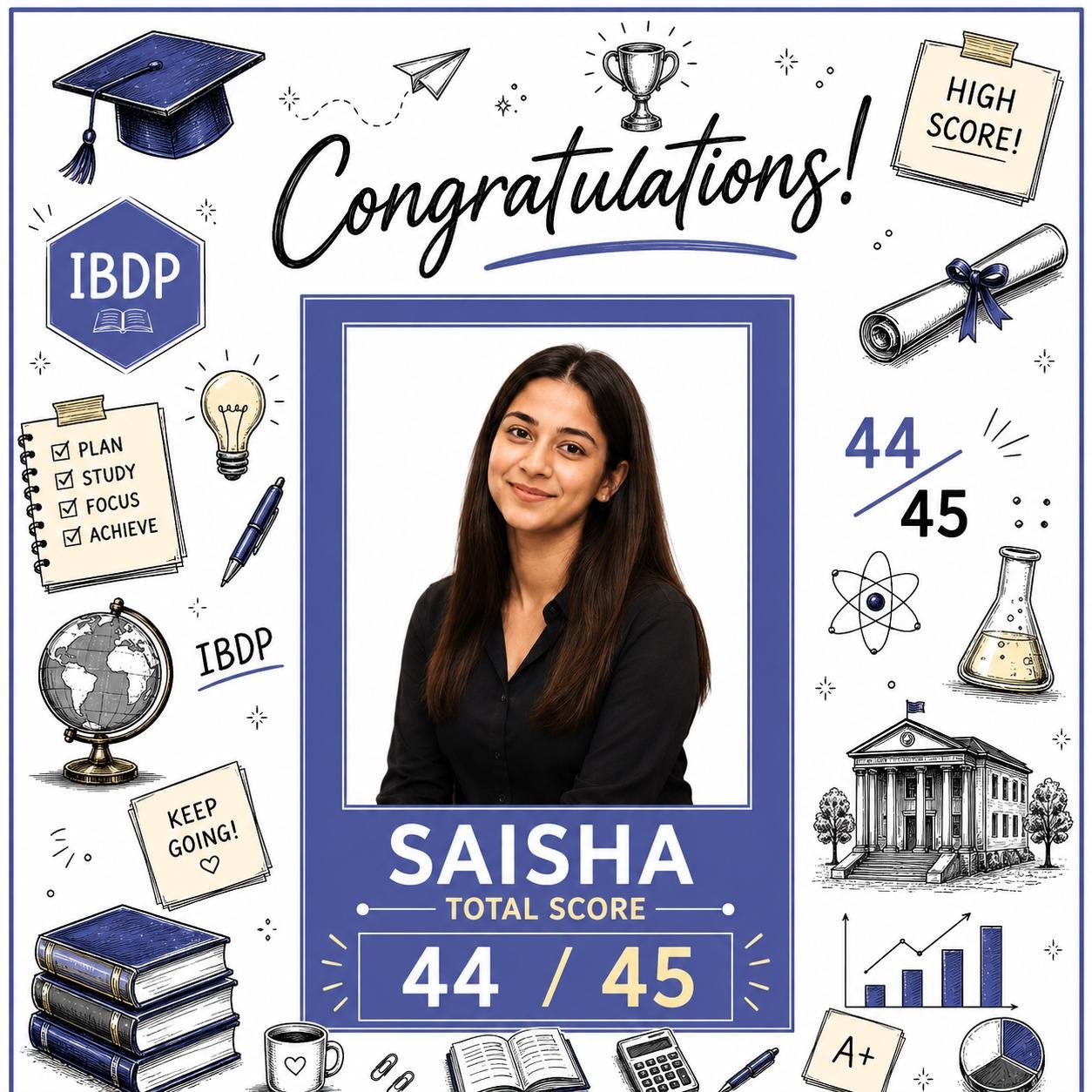



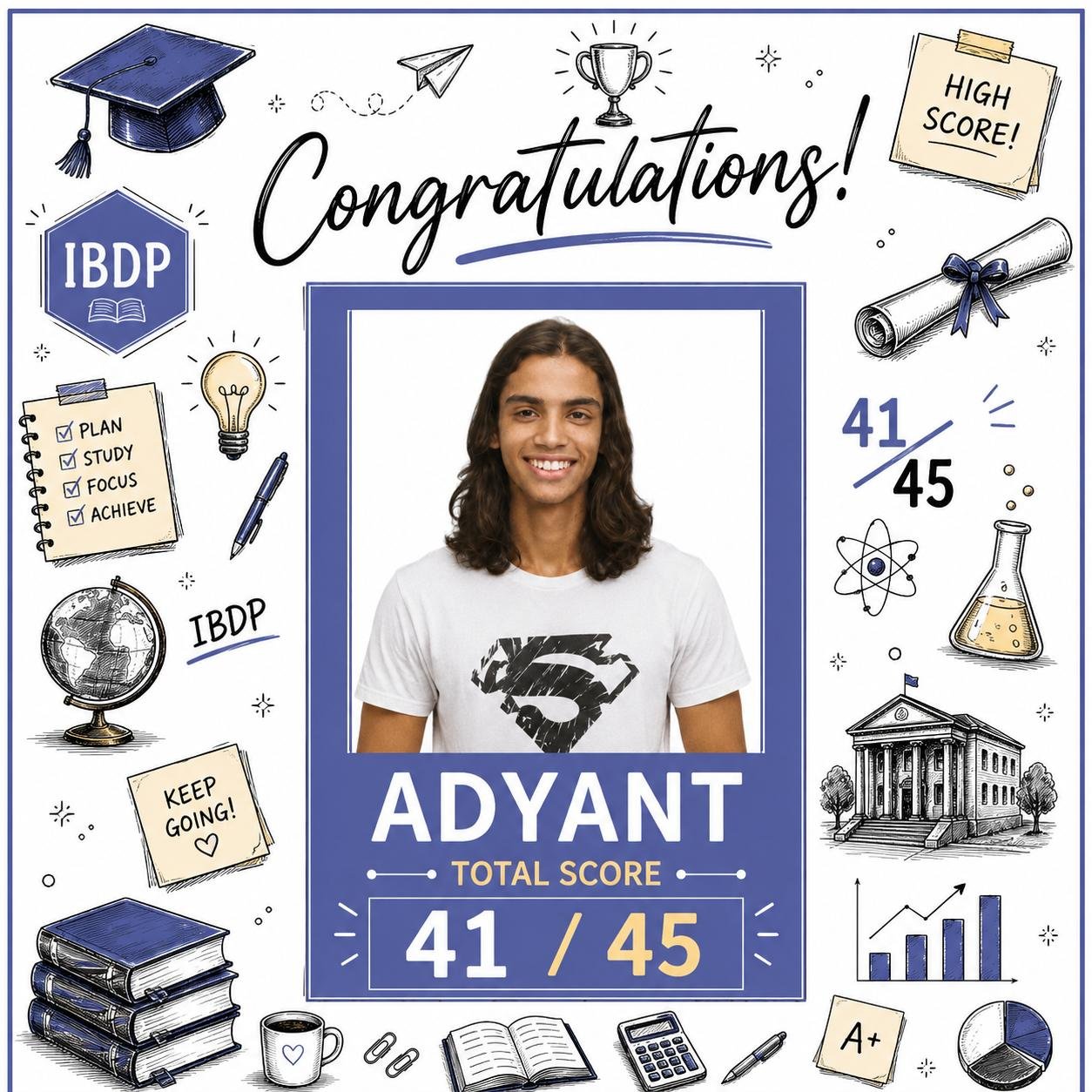

Scores that speak for themselves.
Booking was effortless, the tutor matched my learning style perfectly, and my Economics IA went from a 12 to a 20. Genuinely remarkable.
The 1-on-1 sessions with my tutor completely transformed how I understood organic chemistry. I owe my Oxford offer to this team.
I went from a predicted 36 to scoring 43 in my final exams. IBZENITH's approach is unlike anything I had encountered before.
Our Tutors who’ve been there.
IBO certified examiners — every one scored 40+ in their own IB.

Rishi S.

James Muller

Yaghna Roy

Laura Nair
Reserve Your Session
Choose a time that works for you. One of our IB experts will meet you at the scheduled slot — no prep needed.
Prefer a quick chat? Message us on WhatsApp →